

Cobra casino Plinko
Introduction
Plinko looks almost disarmingly simple at first glance. A ball drops from the top of a pegboard, bounces left and right on the way down, and lands in a slot with a fixed multiplier. That is the whole visual premise. Yet in practice, Cobra casino Plinko creates a very specific kind of tension that many players do not get from standard slots or even from fast table-style games information for Cobra Casino players.
I have spent enough time analyzing gambling products to say this with confidence: Plinko is not interesting because it is flashy. It stands out because it strips the experience down to probability, pacing, and decision framing. There are no reels, no paylines, no card hands to read, and no long bonus sequences. Instead, the entire session revolves around one question: how much variance am I willing to accept for a chance at a bigger multiplier? The full picture of payment methods lives in Cobra Casino blackjack page for detailed casino comparison, including the less common ones.
That is exactly why this format keeps attracting attention in Canada and beyond. The interface is easy to understand in seconds, but the actual session feel can change sharply depending on settings such as risk level, number of rows, and stake size. A low-risk setup can feel steady and almost meditative. A high-risk setup can turn the same board into a sequence of near misses, dry spells, and occasional spikes that completely change the session result.
In this review, I will focus strictly on Plinko itself: what it is, how it works, what makes it engaging, where the real risks are, and what a player should understand before launching it at Cobra casino. The goal is not to oversell the format, but to explain what this game genuinely offers and where its limits become obvious.
What Plinko is and why players keep coming back to it
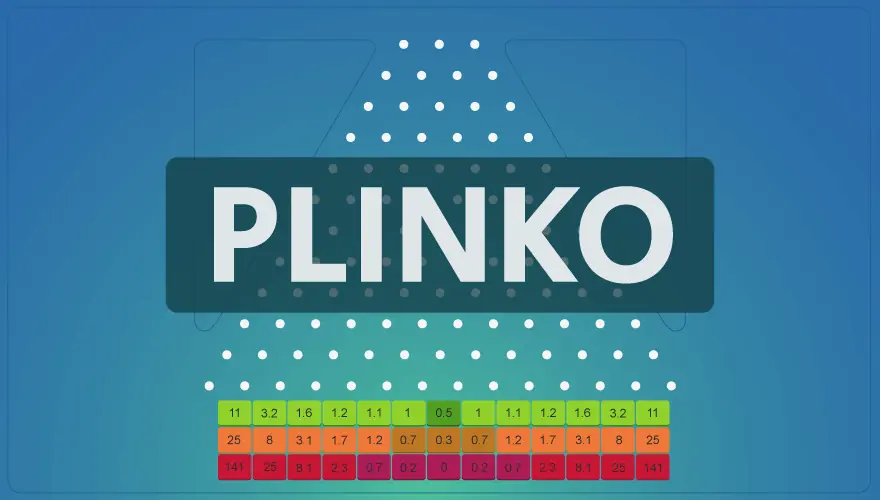
Plinko is a probability-based casino game built around a vertical board filled with pegs. Each dropped ball interacts with those pegs and changes direction repeatedly until it reaches one of several payout zones at the bottom. Every zone carries a predetermined multiplier, and the final return depends entirely on where the ball lands.
Its appeal comes from a mix of visual clarity and emotional uncertainty. Unlike a slot, where several internal calculations remain hidden behind spinning reels, Plinko presents the entire event in front of the player. You see the ball fall. You watch every deflection. You can anticipate the center lanes, fear the edges, and still end up surprised by the result. That transparency matters. Even though the outcome is still random, the process feels visible.
Another reason Plinko became so noticeable is that it compresses the gambling loop into a very short cycle. There is almost no downtime between actions. You choose a stake, set the board conditions, release a ball, and get the result. This makes the format especially attractive to players who prefer quick decision-feedback loops over layered game narratives.
There is also a psychological detail worth noting. In many sessions, the board gives the illusion that the ball was “close” to a larger multiplier. That sense of almost reaching the edge slot is one of the strongest engagement drivers in Plinko. It is not a hidden bonus for Canadian players round or a visual effect. It is the path itself. A ball can look destined for a major return and then bounce back toward the middle at the last moment. That tiny shift is often enough to keep players emotionally invested.
From a user perspective, the game is accessible because the rules are minimal. From an analytical perspective, it is more complex than it first appears because the chosen setup changes the distribution of outcomes in meaningful ways.
How the Plinko system actually works in play
At its core, the mechanics are straightforward. You place a bet, select a configuration, and drop a ball from the top of the board. As it hits each peg, it moves left or right until it reaches the bottom row. Each final slot corresponds to a multiplier. The center usually contains the most frequent but smaller returns, while the outer edges tend to hold the largest multipliers and the lowest hit frequency.
In most modern versions of Plinko, including the style players expect to see at Cobra casino, the session is shaped by three practical variables:
- Bet size — determines the monetary value of each result.
- Risk level — influences how sharply outcomes are distributed across the board.
- Rows or board depth — affects the number of deflections and the spread of possible landing zones.
Risk level is the setting that changes the personality of the game most dramatically. On low risk, the multiplier map is usually flatter. Extreme edge values are lower, and the center tends to return more stable outcomes. On high risk, the board becomes more polarized. The middle may produce many modest or losing results, while the far edges can carry very large multipliers that appear rarely.
The number of rows matters because it changes the path complexity. More rows mean more peg collisions and a broader distribution curve. In simple terms, the ball has more chances to drift before landing. That does not make the session more predictable, but it does change how often the ball reaches certain zones.
One of the most important things to understand is that the movement looks physical, but the experience is still governed by random outcome logic. The bounce path creates suspense, yet players should not mistake visible motion for a skill-based opportunity. You are not controlling the ball after release. The board is there to visualize randomness, not to reward timing or precision.
Why the pace feels different from slots and why that matters
Plinko has a rhythm that many players notice immediately. It is faster than a traditional video slot, but it often feels more personal than an auto-resolved dice or crash-style result. The reason is simple: every round has a beginning, a visible middle, and a short but meaningful ending.
That short visible middle is what gives the game its identity. In a slot, the reels spin and stop. In Plinko, the result unfolds step by step in front of you. Even though the round is brief, those few seconds create enough suspense to make the session feel active rather than automatic.
On a practical level, this can be both a strength and a warning sign. The fast turnaround means players can go through many rounds in a short period. If the stake is too high for the bankroll, losses can accumulate quickly. At the same time, the pace can suit users who dislike drawn-out bonus structures and simply want a clean, immediate cycle of action and result.
I would highlight one observation that often gets missed in generic Trustpilot ratings details: Plinko does not just feel fast, it feels deceptively light. Because the interface is so minimal, players may underestimate how many decisions they are making over ten or fifteen minutes. The session can seem casual while still producing large swings.
Another detail is that the tempo changes psychologically with the risk setting. Low-risk Plinko can feel almost repetitive, because many outcomes cluster around the center. High-risk Plinko creates more emotional spikes, but also more frustration when the board repeatedly avoids the edge multipliers. So the same game can feel calm, irritating, thrilling, or flat depending on configuration.
Risk levels, outcome distribution, and what a player should expect
If I had to identify the single most important concept for a new Plinko player, it would be this: the game is not defined by its board alone, but by the shape of its payout distribution. That distribution changes the entire session.
Players often assume that “higher risk” simply means “bigger top prize.” That is true, but incomplete. What really changes is the balance between frequent small returns and rare large multipliers. In other words, the board stops being just a visual object and becomes a volatility map.
| Setting | Typical session feel | What it means in practice |
|---|---|---|
| Low risk | More even, less dramatic | Smaller swings, fewer standout hits, easier bankroll tracking |
| Medium risk | Balanced but still variable | Mix of ordinary returns and occasional stronger moments |
| High risk | Sharp swings, long dry stretches possible | Rare but potentially large multipliers, higher emotional pressure |
This matters because many players choose a setting based on excitement rather than tolerance for variance. That is often where the mismatch begins. A user who wants regular feedback may quickly dislike high-risk Plinko, even if they were initially attracted by the top-end numbers. On the other hand, a player who enjoys chasing infrequent spikes may find low-risk mode dull after only a few minutes.
There is also a common misunderstanding around “almost winning.” In Plinko, near-edge paths can make it feel as if the ball nearly reached a major multiplier. Emotionally, that is powerful. Mathematically, it changes nothing. The final slot is the only result that counts. This is one of the reasons the game can be more intense than it looks: it creates visible near-miss moments without requiring any elaborate animation package.
A third observation that deserves attention: Plinko often teaches bankroll discipline the hard way. Because the rules are so easy, players may start increasing stakes before they have understood how uneven the session can become. The simplicity of the interface should never be confused with softness of variance.
Probabilities, session logic, and realistic expectations
Plinko is a random game, not a prediction exercise. That should be obvious, but in practice many players still try to read patterns from recent ball paths. They may think the edge is “due” after a run of center landings, or that one side of the board is currently hotter. This is not a reliable way to approach the game.
Each round should be treated as an independent event within the game’s probability framework. The board may visually suggest momentum, but the player should not build a betting strategy around perceived streak logic. In other words, a sequence of modest results does not guarantee a large multiplier next, and a strong hit does not mean another one is less likely immediately afterward.
What matters more is understanding expected session behavior:
- Most rounds will not produce exceptional multipliers.
- Higher-risk settings can create long periods with little visible payoff.
- A single strong result may define the outcome of an entire short session.
- Fast round speed magnifies both good and bad runs.
For that reason, realistic expectations are essential. Plinko is not built to deliver a cinematic progression. It is built to generate repeated probability events with clearly visible outcomes. If a player enters expecting constant high-value returns, disappointment is almost guaranteed. If they enter understanding that most of the entertainment comes from the tension of the drop and the possibility of a standout hit, the format makes much more sense.
It is also worth noting that RTP, where listed, gives only a long-term theoretical frame. It does not smooth out short sessions. A player can experience a very uneven run even in a mathematically fair environment. That gap between theory and lived session experience is especially noticeable in games like Plinko because the rounds are so short and the variance can be very concentrated.
How Plinko differs from slots and other casino game formats
The easiest comparison is with online slots, because many players arrive at Plinko from reel-based products. The difference is immediate. Slots rely on symbols, paylines, bonus features, free spins guide, and layered presentation. Plinko removes almost all of that. There are no themed reels to interpret and no feature hunt in the traditional sense. The appeal comes from direct outcome visibility and adjustable risk structure.
Against top Cobra Casino games before depositing real money, Plinko also occupies a distinct space. It does not ask the player to learn rules like blackjack or baccarat. There is no tactical decision tree once the ball is dropped. At the same time, it offers more visual suspense than many instant-result number games.
| Format | Main attraction | How Plinko differs |
|---|---|---|
| Classic slots | Features, reels, bonus rounds | Cleaner structure, fewer layers, more direct result flow |
| Table games | Rules, strategy, decision points | Much easier entry, but almost no tactical depth |
| Crash-style games | Timing and cash-out tension | No live cash-out choice, suspense comes from the drop path |
| Dice-style games | Fast numerical outcomes | Similar speed, but more visual and emotionally legible |
In short, Plinko sits between passive and active gambling formats. It is more visually engaging than a bare probability tool, but less mechanically rich than a slot or a card game. That middle position is exactly why some players love it and others lose interest quickly.
Practical strengths and limitations of Plinko
From a user-focused perspective, Plinko has several clear strengths. The first is accessibility. A new player can understand the core loop almost instantly. The second is pace. The game gets to the point without requiring long setup or rule reading. The third is configurability. Risk levels and board depth can noticeably change the experience, which gives the format more range than its simple appearance suggests.
There is also a strong transparency advantage. Because the path is visible, players often feel more connected to each result than they do in a standard spin-based product. Even when the outcome is disappointing, the process feels observed rather than hidden behind a reel stop.
But the limitations are just as real. Plinko can become repetitive if a player wants variety, theme development, or bonus structure. It also offers almost no strategic depth beyond selecting settings and managing stake size. Once the ball is released, the player is a spectator.
Another drawback is emotional volatility. The game can create a high level of anticipation from a very short event. For some users, that is the appeal. For others, it becomes tiring, especially in high-risk mode where many rounds may feel unproductive before one major result appears.
There is a practical limitation too: because the interface is clean and the rounds are short, it is easy to underestimate session cost. This is not a flaw in the math itself, but it is a real usability concern. Fast games demand more discipline than they appear to.
Who Plinko suits best and who may prefer another format
Plinko is best suited to players who enjoy fast rounds, visible randomness, and adjustable variance. If you like seeing the whole event unfold and prefer a stripped-down interface over a feature-heavy slot, the format can be very satisfying. It also works well for users who want short sessions without learning complex rules.
At Cobra casino, this makes Plinko a sensible option for players who value directness. You are not there for story, soundtrack, or multi-stage progression. You are there for a compact probability experience with immediate feedback.
On the other hand, not everyone will enjoy it for long. Players who want strong narrative themes, expanding mechanics, free spins, or a sense of progression may find Plinko too bare. Those who prefer games where skill or decision-making play a larger role may also lose interest, because the meaningful choices are front-loaded into setup rather than made during the round itself.
I would be especially cautious recommending high-risk Plinko to players who chase losses or react emotionally to near misses. The game can be exciting, but that same excitement can distort judgment if the session is not approached with limits and realistic expectations.
What to check before starting a Plinko session
Before launching Plinko, I would suggest focusing on a few practical points rather than jumping straight into rapid-fire drops.
- Review the risk setting first. Do not choose high risk just because the headline multiplier looks attractive.
- Set a stake that fits fast gameplay. A comfortable slot bet may feel too high in a rapid Plinko session.
- Understand the board layout. Check how rows and multipliers are arranged before committing to a rhythm.
- Use demo mode if available. It helps you feel the pace and variance without immediate bankroll pressure.
- Decide what kind of session you want. Stable entertainment and spike-chasing are not the same goal.
That last point is more important than it sounds. A lot of frustration in Plinko comes from choosing settings that do not match the reason you opened the game in the first place. If you want steady engagement, do not configure the board for extreme swings. If you are specifically hunting rare outsized multipliers, do not expect frequent reinforcement along the way.
Final verdict on Cobra casino Plinko
Cobra casino Plinko offers a clean, fast, and surprisingly nuanced gambling format built around visible randomness and configurable variance. Its strongest quality is not complexity, but clarity. The rules are easy, the feedback is immediate, and the tension comes from watching a simple event unfold into very different outcomes.
What makes the game worth trying is the way it turns a minimal interface into a real session identity. Low-risk settings can feel controlled and steady. High-risk settings can feel sharp, frustrating, and occasionally explosive. That range gives Plinko more depth than many players expect from a pegboard drop game.
Its weak side is just as clear. The format has limited variety, little tactical involvement, and a pace that can accelerate spending if the bankroll plan is loose. It is also a game where visible near misses can create more emotional pull than the simple design suggests.
My overall view is straightforward: Plinko is a strong choice for players who want direct action, transparent outcome flow, and control over session style through risk settings. It is less suitable for those who want feature-rich slots, strategic decision-making, or a slower, more layered gambling experience.
So, is it worth playing? Yes, if you understand what it really is. Plinko is not a slot substitute and not a skill challenge. It is a compact probability game with a very specific appeal: fast rounds, visible suspense, and variance that can feel mild or severe depending on how you set it up. That is its strength, and that is exactly where caution is needed.
FAQ
How does the Plinko game work on the screen?
A ball is launched from the top and drops through pegs, bouncing into a scoring grid. Each landing zone has its own multiplier so the final outcome depends on where the ball lands.
How is Plinko different from a typical slot or live casino table on the casino site?
Plinko is a single mechanic round based on ball drops and peg paths, with results shown by the landing zone multipliers. Slots rely on reels and predetermined symbols, while live casino games are handled by a dealer and table procedures.